The evidence for unfairness is not subtle. People are born into wildly different circumstances they did nothing to earn, illness lands without regard to conduct, and effort and outcome are only loosely related. The video does not begin by disputing any of that.
Its argument is about the frame rather than the observations.
The frame problem
Every observation supporting unfairness is made within one lifetime. That is the only window available, so it feels like the whole picture rather than a section of it.
The video's proposal is that we are watching one act of a longer play and drawing conclusions about the plot. Not that the suffering is unreal — that the accounting is incomplete, because the ledger extends past the part we can see.
This is where reincarnation enters, and it enters as a requirement rather than a decoration: without continuity, there is no larger frame for the accounting to happen in.
What karma is doing
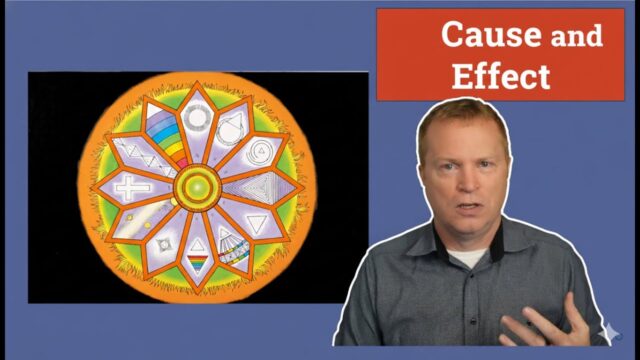
Karma supplies the connection between the acts. Circumstances are not distributed at random and are not handed down as sentences; they are consequences arriving from earlier causes, in a system where what is sent out returns.
The section titled the function of karma is the important one, and it is the same emphasis as karma isn't punishment. The purpose is not to settle accounts but to produce understanding: the being that has experienced the effect of an action from the receiving end knows something it could not have learned any other way.
So fairness here does not mean everyone gets a pleasant time. It means nothing arrives disconnected from anything, and nothing is wasted.
A science of destiny
The most interesting framing in the video is the phrase a new science about destiny.
The claim is that fate is not arbitrary and not decreed, but lawful — and that anything lawful can in principle be studied. Destiny becomes a subject with regularities rather than a mystery to be endured.
That is a genuinely different proposition from either the religious version (a plan you are not shown) or the materialist one (no plan at all). It is a claim that the plan is inspectable.
What the video concedes
To its credit it is direct about the difficulty: this is hard to accept in the middle of suffering, and it says so rather than glossing over it.
That honesty matters, because it separates the argument from the misuse. A structural account of why circumstances are not arbitrary is not an instruction to accept them, and the same material treats the development of compassion — medlidenhed — as the whole point of the process. A closely related treatment of the same question is if life is just, why does it look so unfair.
Key ideas
- The evidence for unfairness is real; the argument concerns the frame it is being assessed in.
- Observations within one lifetime cannot settle a question whose accounting spans several.
- Karma connects the acts: circumstances are consequences rather than random allocations or sentences.
- Fairness means nothing is disconnected and nothing is wasted, not that everything is pleasant.
- Destiny is presented as lawful and therefore studiable — a science rather than a mystery.
Chapters
About this article. It summarises the video above from The Eternal World Picture. The writings of Martinus Thomsen are published by the Martinus Institute.