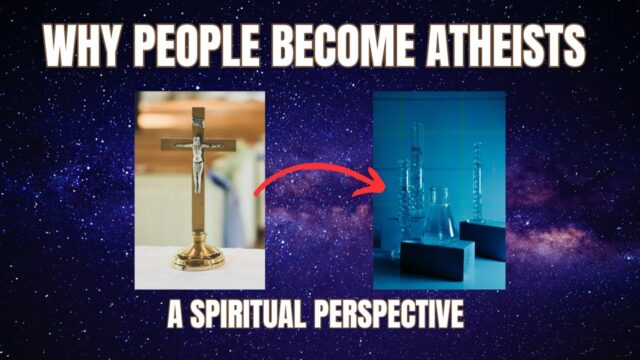
This revisits the ground of why religion is declining and pushes past it. The diagnosis is the same — belief and intelligence are different abilities, and developing one displaces the other. The new material is what happens next.
Whether the trend is global
The first question is whether emptying churches in some parts of the world predict the same everywhere.
The video's answer follows from the mechanism rather than from projection. If the driver is the spread of education and analytical habits, then the decline should track that spread rather than any particular culture. Wherever the ability to interrogate a claim develops, faith-based structures should come under the same pressure.
That is a testable prediction, which is more than most commentary on secularisation offers.
The misfit
The framing that does the most work here is misfit — between what people now need and what faith-based religion is built to supply.
The need has not gone away: an account of what life is for, a basis for conduct, something to do with grief. What has changed is the acceptable form of delivery. An answer that arrives on authority no longer functions for people trained to ask how a claim is known, regardless of whether the answer is any good.
So this is not a story about religion being wrong. It is a story about a delivery mechanism becoming incompatible with its audience.
The limits of atheism
The most substantial new section, and the fairest.
Atheism is treated as a real position rather than a caricature, and its strength is granted: it declines to accept what has not been established, which is intellectually honest.
The limitation identified is that it is fundamentally a negation. It says what is not the case. That answers the question of what to believe, and leaves untouched the questions of what life is for and how to act — because a denial does not generate a direction. As a correction to unfounded belief it works. As a replacement for everything religion was doing, it is not the same kind of thing.
The same conclusion is reached about philosophy elsewhere: insight without consensus, and so no compass.
What is proposed instead
The last section is where the video stakes its claim, and where it takes care.
The eternal world picture is offered as a logical account of life's meaning that can be checked against your own intelligence and experience — and the closing chapter is titled, pointedly, not a new religion.
That distinction is the whole argument. If the problem is that authority-based answers no longer work, then replacing one authority with another solves nothing. The only kind of answer that fits the diagnosis is one that does not ask to be believed at all, which is the standard set out in what spiritual science is.
Key ideas
- If the driver is education rather than culture, the decline should follow education wherever it spreads.
- The core problem is a misfit: the need religion met persists, but answers arriving on authority no longer function.
- Atheism is granted its intellectual honesty but identified as a negation — it says what is not so.
- A denial cannot supply direction, so atheism is not a replacement for what religion was doing.
- The eternal world picture is offered explicitly as not a new religion, since a new authority would not fit the diagnosis.
Chapters
About this article. It summarises the video above from The Eternal World Picture. The writings of Martinus Thomsen are published by the Martinus Institute.