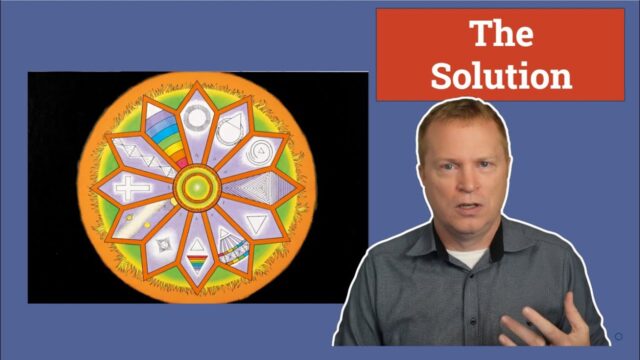
We have more access to information than any generation before us and less confidence in almost everything. That looks like a paradox, and this video argues it is not one.
Four pillars, examined
The first part goes through them in turn, and the pattern is the same each time.
Religion rests on the ability to believe an authority — the mechanism examined in why religion is declining, and one that a more analytical population supplies less readily.
Money works entirely on shared confidence. It has no value that survives everyone deciding it does not, which is a fact people mostly avoid looking at directly.
Marriage as an institution rests on assumptions about permanence and obligation that have visibly loosened.
Science is the interesting one, because it is the most reliable of the four and is being doubted anyway. The video's account is not that science has failed but that its authority was being used to answer questions it does not address — and the disappointment is with the borrowed authority rather than the method.
What they share is that each is a temporary foundation. Not fraudulent, but built out of things that change. Examine any of them closely enough and the ground moves, because that is the kind of ground it is.
Why the examination is happening now
The middle section explains the timing through the hunger and satiation principle.
An appetite is exhausted by being satisfied, and a new one takes its place. Applied to societies: once the things a foundation was providing have been obtained, the appetite it fed is satisfied, and what is left is the appetite for something that foundation was never able to supply.
On this reading the current doubt is not decay. It is what satiation looks like from the inside — the growing pains of a stage that has got what it came for and is asking a larger question.
What would hold
Part three offers the alternative, and it is the same one as the absolute fixed point: a foundation made of something that does not change.
Then it says something more specific and more interesting. The fundamental tone of the universe is described as being a blessing to others — and the section titled "who we are next to" is where the video does its best work, expanding the circle from immediate family outward until it includes everything.
That is a claim about purpose rather than about metaphysics, and it makes the abstraction usable. If it is right, then the question of what to build on has a practical answer that does not require settling the cosmology first.
The video is honest that this is not a complete guide to changing your life. It explains why the doubt is happening and points at where a more durable footing would be found.
Key ideas
- Religion, money, marriage and science are all being doubted, and all rest on foundations that change.
- Science is doubted despite working, largely because its authority was borrowed to answer questions it does not address.
- The hunger and satiation principle explains the timing: a satisfied appetite is replaced by a larger one.
- The current loss of confidence is read as satiation rather than decay.
- The alternative is an unchanging foundation, with the universe's fundamental tone described as being a blessing to others.
Chapters
About this article. It summarises the video above from The Eternal World Picture. The writings of Martinus Thomsen are published by the Martinus Institute.