Asked as a philosophical exercise, this question is interesting. Asked for real, in the middle of something, it is not — and most of the available answers are built for the first version.
One says: trust God, it is part of a plan. It just never shows you the plan. The other says: the universe is indifferent. That has the merit of honesty and no other merit at all. This video sets out a third option.
The contrast principle
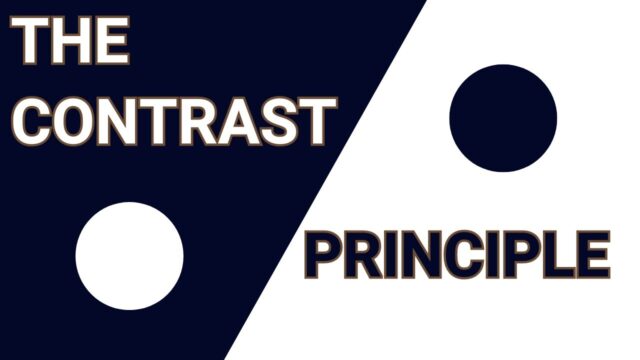
The first component is the one people find hardest, so the video puts it first. Experience requires contrast. Nothing can be experienced as light except against dark; warmth is only warmth relative to cold. Extend that from sensation to everything and darkness stops being an intrusion into experience and becomes a condition of it.
This is a structural claim rather than a comforting one. It does not say that any specific instance of suffering was necessary. It says that a universe with no contrast would have nothing in it to experience.
The spiral and the six kingdoms
The second component is position. Martinus describes development as a spiral running through six kingdoms, and the question of why life looks the way it does becomes a question about which part of that cycle we are standing in.
The video’s image for the present moment is that we are near the end of winter. Not at the worst of it, and not at the point where it is over — at the stage where the direction has changed but the conditions have not caught up yet.
Hunger and satiation
The third component explains movement. The hunger and satiation principle says that appetite is exhausted by being satisfied, and that a new appetite takes its place. The longing for something better is therefore not naivety to be talked out of. It is the mechanism by which anything changes at all.
The claim underneath
The video ends on the strongest version of its thesis: on Martinus’ account, suffering beings are not the casualties of the world plan. They are what it is for. Whatever else is true of that claim, it is not the same as being told to trust a plan you are not shown.
Key ideas
- Experience requires contrast, so darkness is presented as a structural condition rather than an intrusion.
- The spiral cycle runs through six kingdoms, and “why is it like this?” becomes a question about position within it.
- The video places humanity near the end of winter — direction changed, conditions not yet caught up.
- The hunger and satiation principle makes longing the engine of development rather than a weakness.
- The strong claim: suffering beings are the purpose of the world plan, not its collateral damage.
Chapters
About this article. It summarises the video above from The Eternal World Picture. The writings of Martinus Thomsen are published by the Martinus Institute.