Most people are standing on something. A job, a relationship, savings, a record of things achieved. It functions as ground: the thing that makes the rest of life feel supported rather than precarious.
The uncomfortable observation this video starts from is that all of it moves. Not because you chose badly, but because every one of those things is the kind of thing that changes.
Why the usual foundations cannot hold
The point is not moralising about materialism, and it is worth separating the two. Money, relationships and achievement are good things; the argument is about what weight they can bear.
Each of them is timely in the sense set out in the definition of eternity — it began, and it will end. Anything with those properties can serve as a support for a while, and cannot serve as a foundation, because a foundation is precisely the thing you do not have to keep replacing.
This is why the ground can move without anything having gone wrong. It was always the kind of ground that moves.
What an unshakeable perspective would require
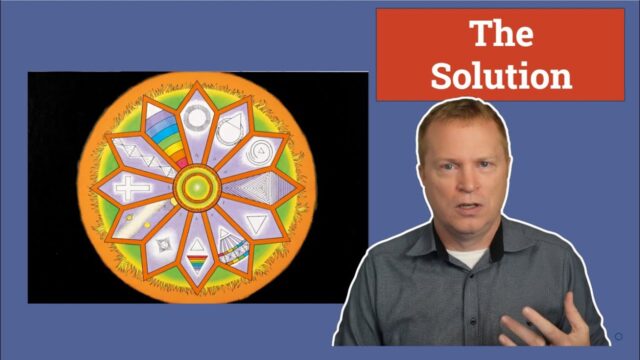
If a stable foundation exists, it has to be made of something that does not begin or end. That rules out circumstances, and it rules out achievements, and it leaves eternal principles — the structure that holds regardless of what your particular life is currently doing.
This is the absolute fixed point applied to living rather than to epistemology. The same requirement that made absolute truth possible makes a stable footing possible, and for the same reason: it is the only thing available that is not in motion.
The claim about happiness
The video's strongest claim is that shifting from temporary supports to an absolute one is what makes durable happiness and fulfilment possible.
The reasoning is that happiness resting on things that change has to be defended — it comes with the low-level work of keeping the circumstances in place, which is a tax paid continuously. Happiness resting on something that does not change is not exposed in the same way.
It is worth naming what is not being claimed. Nothing here says the difficult things stop being difficult, or that circumstances stop mattering. The claim is narrower: that they are the wrong material to build the foundation from, however good they are to have.
Whether the eternal principles the video points to are real is the question the rest of the material exists to argue. This video is about what would follow if they were.
Key ideas
- The things most lives rest on — finances, relationships, achievement — are all temporary by nature.
- That makes them supports rather than foundations: they can be lost without anyone having made a mistake.
- A genuine foundation would have to be made of something that neither began nor ends.
- This is the absolute fixed point applied to living rather than to knowing.
- Happiness built on changing things must be continuously defended; the claim is that an absolute footing removes that tax.
About this article. It summarises the video above from The Eternal World Picture. The writings of Martinus Thomsen are published by the Martinus Institute.