Humanity has given very different answers to the question of what life is for, and the usual conclusion drawn from that is either that all of them are cultural inventions or that one of them is right and the rest are errors.
This video proposes a third reading: the answers form a sequence, and each is what a particular stage of development is able to see.
The five stages
Instinct. The earliest stage, illustrated by peoples living closest to nature. The world is read directly, without theory. Meaning is not a question that gets asked separately from living, because there is no distance from which to ask it.
Religion. Meaning is supplied by an authority and received on faith. This is a real advance: it makes a shared account possible, which instinct alone cannot support. Its limit is the one described in why religion is declining — it depends on the ability to believe.
Materialism. Belief is replaced by evidence, and the gain in reliability is enormous. But the method is built to answer how, and the question here is why — so at this stage meaning tends to be reported as absent rather than found, which is a result about the instrument.
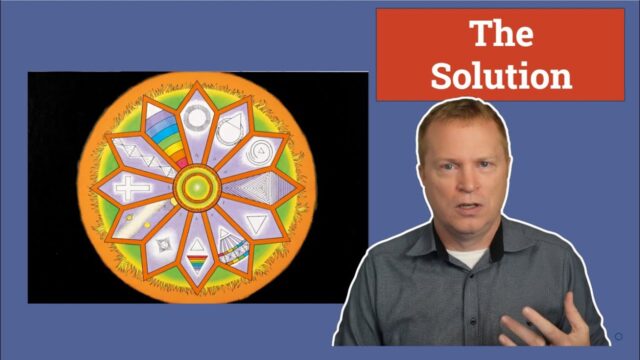
Spiritual science. The attempt to apply the same rigour to the question the previous stage could not reach: what the intention behind the physical world is, examined by argument that can be checked. This is where Martinus locates his own work, and what it would require is set out in what spiritual science is.
Spiritual experience. The final stage, where the account stops being something worked out and becomes something perceived directly, as intuition develops.
The claim worth arguing with
The most pointed line in the video is that until the later stages, we have made the meaning of life in our own image — each stage produced an answer shaped like itself.
That is a strong claim, and it applies to the stages the video favours as much as to the ones it does not. Someone who thinks the whole scheme is a projection has been handed the argument for saying so.
What is offered as the destination is that the world has intention behind it and is not a random place, and that the intention is benign. First understood theoretically, and later — the video says — perceived directly.
That last step is the one worth flagging honestly. Stages one to four can be examined from outside; the fifth is by definition available only from inside. The video presents it as where the road leads, not as something it can hand over.
Key ideas
- The historical answers to the meaning of life form a developmental sequence rather than a set of competing guesses.
- The five stages: instinct, faith-based religion, materialism, spiritual science, and direct spiritual experience.
- Materialism reports meaning as absent partly because its method answers how rather than why.
- Each stage tends to produce a meaning shaped like itself — a claim that cuts against the scheme as much as for it.
- The endpoint is intention behind the world, understood theoretically first and perceived directly later.
Chapters
About this article. It summarises the video above from The Eternal World Picture. The writings of Martinus Thomsen are published by the Martinus Institute.